admin
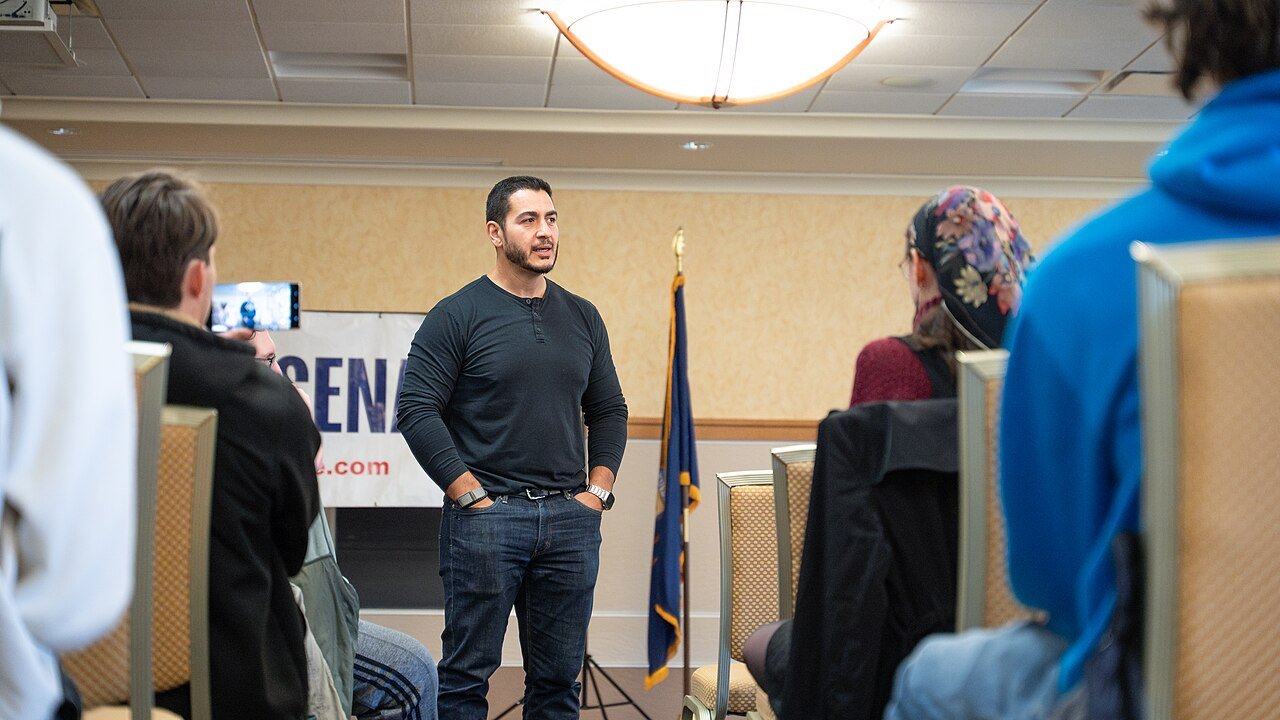
Abdul El-Sayed’s religion is Islam. The Michigan physician, public health advocate and 2026 Democratic U.S. Senate candidate is a practicing Muslim who was raised in a Muslim household in southeast Michigan, and he has spoken openly about his faith in interviews and campaign speeches. His Abdul El-Sayed religion has drawn national attention during the 2026 Senate race against Republican Mike Rogers.
Early Life and Background
El-Sayed was born on October 31, 1984, in Rochester Hills, Michigan, a Detroit suburb, to Egyptian immigrant parents, according to Wikipedia. His father, Mohamed El-Sayed, grew up in Alexandria, Egypt, moved to the United States for a PhD at Wayne State University, became a mechanical engineering professor, and has also served as an imam. His parents divorced when he was three, and he was raised mainly by his father and stepmother in southeast Michigan.
His upbringing in a Muslim family and his father’s role in the community shaped his religious background. In his Rhodes Scholarship application, Wikipedia reports, he wrote that his faith teaches that saving one life saves all of humanity, an idea he traced to a childhood conversation with his father. He went on to study at the University of Michigan, Oxford and Columbia.
Abdul El-Sayed Religion and Religious Views
El-Sayed has described his faith in plain terms. In a 2017 interview with Detroit Public Radio, reported by Newsweek, he said: “I am somebody who believes in faith” and “I believe in one God,” adding that God commands him “to create a more just, more equitable world.” In the same interview he called himself “brown” and “Muslim,” saying, “I’m never going to escape those facts, because they’re who I am.”
His public emphasis has varied. Newsweek reports that in 2025 he said he is not running “to be the first anything” but to be “the best senator for the state of Michigan.” Yet in September 2026 he addressed the Annual Islamic Society Conference in Detroit and spoke directly about Muslim American identity. As Al Jazeera reported, he said that “at their best, being Muslim makes us better Americans … and being American enables us to be better Muslims.” He also said that “Michiganders don’t care how you pray,” but “what you pray for and what you hope for.”
For comparison, see our explainers on Adam Hamawy’s religion and on Haley Stevens’ religion, another Michigan Democrat. El-Sayed’s faith has also been the subject of political attacks. Newsweek reported remarks by Rep. Nancy Mace and a social media post by President Trump that the Council on American-Islamic Relations (CAIR) called Islamophobic. El-Sayed has responded publicly and has defended the compatibility of his spiritual beliefs with American civic life.
Frequently Asked Questions
What religion is Abdul El-Sayed?
Abdul El-Sayed is Muslim. Wikipedia lists his religion as Islam, and in a 2017 Detroit Public Radio interview he described himself as Muslim and said he believes in one God. In September 2026 he spoke publicly about his Muslim faith at an Islamic Society conference in Detroit.
Was Abdul El-Sayed raised Muslim?
Yes. He was born in Rochester Hills, Michigan, to Egyptian immigrant parents, and his father, Mohamed El-Sayed, has served as an imam, according to Wikipedia. He grew up in southeast Michigan.
Does Abdul El-Sayed say his faith guides his politics?
He has described faith as a source of his commitment to justice, saying in 2017 that God commands him to create a more just and equitable world. In a 2025 Newsweek report, he downplayed religion as a defining feature of his candidacy, saying he is running to be the best senator for Michigan.
Has Abdul El-Sayed faced criticism over his religion?
Yes. In 2026, public figures including Donald Trump and Nancy Mace made remarks about him or about Muslims in public office that the Council on American-Islamic Relations (CAIR) called Islamophobic. El-Sayed has responded publicly, and he argued in Detroit that being Muslim and being American are compatible.